Tuesday the 27th of October, 2026
Think of the children
There are many reasons for parkrun’s unprecedented success over the years, but perhaps none more so than the fact we’d started from scratch and then approached every challenge and decision from the position of: regardless of what’s come before, what actually is the right thing to do?
This is the essence of first principles thinking, which is the practice of breaking problems down into the basic truths you know for certain, rather than reasoning from convention, precedent, or ‘the way it’s always been done’. And then moving forward from that point, free from the limitations of previous approaches.
One great example of this from the early days of parkrun was resisting the pressure placed on us to stop children walking or running 5k. Which sounds ridiculous saying out loud in 2026, but back then it was considered by many to be pretty controversial.
Looking back at the UK Athletics (UKA) rules at that time, under 13s were capped at running no more than 4km, and under 11s needed ‘correspondingly reduced distances’. Regardless, thousands of young children were regularly and happily participating in our events.
These points, in combination, resulted in an incredible level of pressure on us from funders, governing bodies, and assorted experts, to follow formal guidance, and which for a decent period of time was my number one challenge in keeping parkrun events true to their original principles.
Further, whilst it can be easy to hide behind the ‘parkrun isn’t a race’ position, I think that would have been a lazy defence on our part and ultimately failed.
The reality was, and still is, that physiologically there is no difference between a 5k parkrun event and a 5k race. And if we’re going to say that running 5k is bad for children, and then prevent them from participating, that needs to be backed up not only by evidence of potential harm, but evidence that any potential harm outweighs any potential good.
So, going back to first principles …
We were a community event that looked to get people of all ages, backgrounds and abilities outdoors, active and social.
The evidence was clear that across the UK population we were experiencing an epidemic of inactivity, leading to a multitude of lifestyle-related diseases.
This was particularly clear in children, and the Chief Medical Officers’ guidelines were for children aged 5+ to engage in moderate to vigorous intensity physical activity for at least 60 minutes and up to several hours every day.
And covering 5km on foot, around your local park or open space, fits comfortably within a single day’s recommended activity.
It's clear then that the starting position for the question of should younger children be able to participate in parkrun is a resounding yes.
Yet, in one particular meeting of the governing body’s advisory group, with pressure coming from around the table to ‘at least set a lower age limit of 12’, I pushed back and asked for evidence to be presented that this was the right thing to do.
As I presented my rationale for saying yes, and requested their rationale for saying no, there was silence around the room. Eventually someone fronted up and said ‘what about their speed development’ … which of course didn’t quite reach the threshold for justifying the exclusion of children from our events.
Fortunately, through sheer stubbornness and determination, our inclusion of children from the age of four upwards was recognised and, over time, accepted more broadly as the right thing to do.
And there was of course one other decision made here, thanks to really understanding the problem we were trying to solve. And that was the introduction of the under-11s rule, where all children under the age of 11 needed to be within arm's reach of a parent, guardian, or designated adult at all times. Because the challenge around children’s participation was never about overdoing exercise, running too far, or messing with their speed development, but it was about ensuring they were safeguarded properly and event teams weren’t placed under undue pressure when including them.
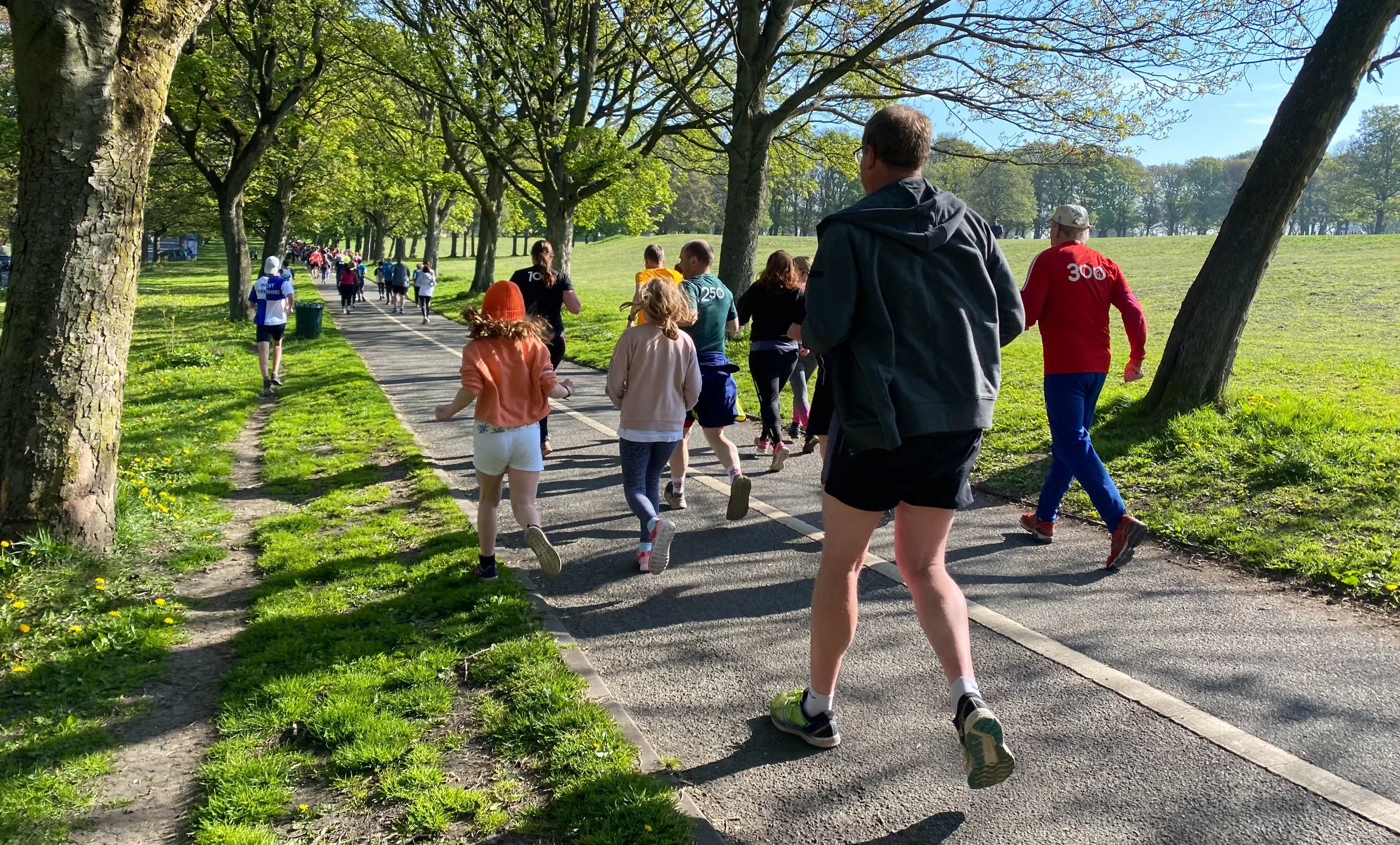
Rosie and Ella, Woodhouse Moor parkrun, April 2022.
Comment
This story is important, because despite all of the available evidence pointing overwhelmingly toward allowing younger children to participate in parkrun events, it was considered the wrong thing to do by many experts in the field. These were well educated, experienced, and well intentioned people, who I had great respect for, but who were convinced by the way things had always been done simply because that was the way things had always been done.
This principle is brilliantly described in the book, Mistakes Were Made (But Not by Me). Where social psychologists Carol Tavris and Elliot Aronson explain why the more time, money, reputation or identity someone has put into a position, the harder it is for them to let go of it. Even if that position has no evidence-based foundations whatsoever.
To date, in total and from public data, there have been around 147 million all-time parkrun finishes, of which many millions will have been by children under the age of 12. Which is something we should all be incredibly proud of.
I wonder what decisions you or your organisation are making, that if reconsidered through first principles you would approach differently?
Tom Williams
Co-Founder, Participate World
participateworld.org
The Participate Playbook newsletter reflects Tom Williams' personal experience and recollections from his time at parkrun. It is not an official parkrun position or record, and any errors are unintentional. Tom writes as an independent consultant through Participate World Limited, and neither he nor the company are affiliated with, employed by, or representatives of parkrun Global or any of its group companies.
