#006 / Just Say No
Tuesday the 13th of October, 2026
Just Say No
In the earliest days of parkrun it was a very simple and very clear concept: a free, weekly, timed 5km run, at 9am every Saturday morning, around Bushy Park in West London. And that was it. Brilliant.
It wasn’t that long however before the model was being challenged. Whilst in 2004, Christmas Day and New Year’s Day were Saturdays and the event carried on as normal, in 2005 those days were Sundays. Thankfully, the organisers decided to begin the festive tradition and hold additional events. But mission creep had begun. And there was now a metaphorical asterisk after the word Saturday, which pointed toward *plus Christmas Day and New Year’s Day.
And the following two decades became a constant challenge to keep the main thing the main thing.
Unless of course there was good reason. But what makes a good reason? And therein lies the challenge all organisations face as they march toward significant scale: what do you change and what do you keep the same?
Most of the time we got those decisions right at the first time of asking, but every now and then we did something that didn’t really work and required us to have a good hard word with ourselves and stop doing something we once loved. Sometimes I’m glad we said yes at first despite saying no later. It was the right thing to do at one point in time, and then the wrong thing to do at a later point. And that’s fine.
New Year’s Day doubles were a good example of that, where for a long time the ability to do two (or sometimes three) events on the 1st of January was super fun and a great way to start the year. But over time they created a level of interest that put events under so much pressure, in a way that was so hard to mitigate, that we brought that much-loved tradition to an end.
Sometimes however it was never the right thing to do and we learnt the hard way that we needed to do a better job of protecting the organisation we loved so much. One example of that was the short-lived Bespoke parkrun series.
In 2011, in an attempt to better communicate what parkrun was, we decided to create the option to deliver a parkrun event that wasn’t tied to any specific location or day. Essentially, we could put an event on at any time in any place, and it would produce a results table like any other event and credit people towards participation milestones like any other event. I think there were three of these in total, the first one to show off our events to a University conference in Leeds, the second on another random day I can’t remember (it’s late), and the third was on a Tuesday night in support of a sponsor at the time.
None of them really worked, and all presented a decent level of risk that we hadn’t accounted for. Parks are much busier in afternoons or evenings, and other park users aren’t prepared for a bunch of thundering lycra covered elephants (apologies for the reference, but for some reason I was reminded of that crazy interview with Giles Coren). And despite putting on thousands of Saturday-morning events, our ability to predict numbers for non-Saturday-morning events was limited at best. All of that, of course, resulted in parkrun events that weren’t really parkrun events, that caused us no end of logistical challenges and that risked serious reputational damage. All whilst taking up endless amounts of time and energy.
And we did even manage create a difficult conversation with one particular (very supportive) landowner who pressured us pretty aggressively to do a very early weekday event on public roads in order to accommodate the Olympic torch relay as it passed through their town! Saying no to them was pretty challenging, risked breaking that relationship, and I understood their frustration.
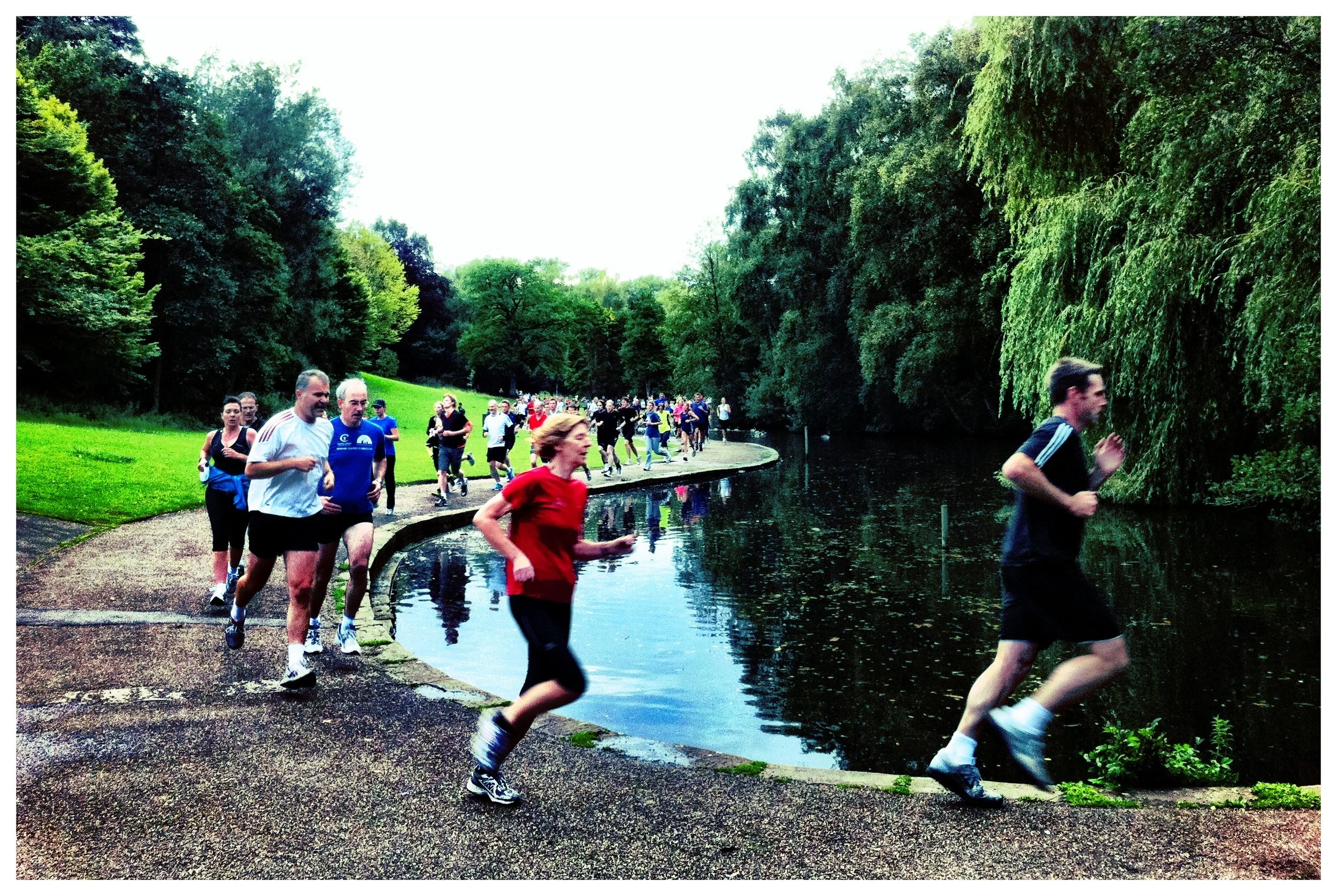
parkrun on a Tuesday evening!
Comment
If you’re reading this I have no doubt that you’re passionate about contributing to the world and supporting community sport in some way.
So often the desire to say yes comes from a place of compassion, selflessness, and generosity, and feels like very much the right thing to do at the time. And saying no can feel much harder to do, and often leave people feeling disappointed and excluded. Something none of us enjoy.
But if there’s any common denominator across the organisations we work with at Participate World, it’s that they’re great people doing (too many) great things. And the act of doing too many great things severely impacts their ability to achieve sustainable impact at scale, and in turn make the world a healthier and happier place.
As difficult as saying no to the Bespoke parkrun concept in the first place would have been, unpacking the mess saying yes created was much more so.
Tom Williams
Co-Founder, Participate World
participateworld.org
The Participate Playbook newsletter reflects Tom Williams' personal experience and recollections from his time at parkrun. It is not an official parkrun position or record, and any errors are unintentional. Tom writes as an independent consultant through Participate World Limited, and neither he nor the company are affiliated with, employed by, or representatives of parkrun Global or any of its group companies.
